
Families Struggle and Hope: The Ongoing Impact of Police Brutality MAPB
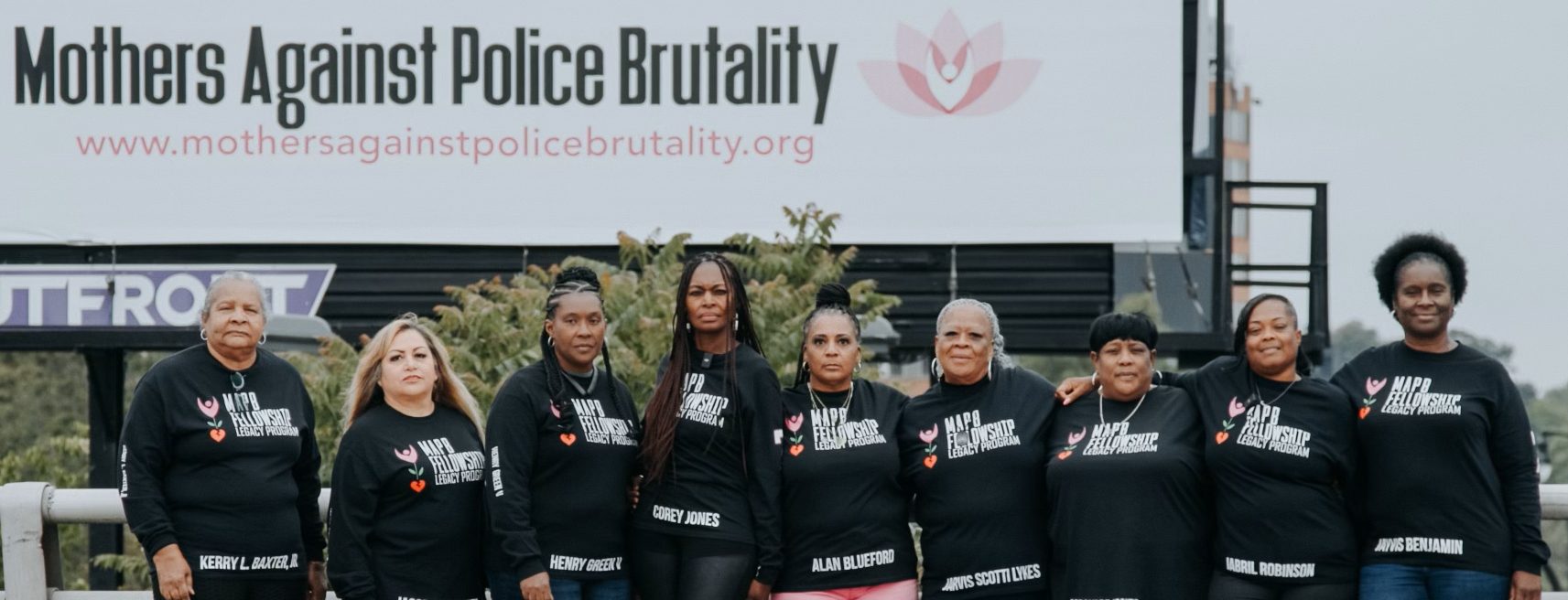
“Losing a loved one to violence of any kind is a hurt that won’t quit,” Collette Flanagan, founder of Mothers Against Police Brutality, says. “But losing a family to police violence is like a tsunami of pain that blows your family into a million pieces. It can take a lifetime to put ourselves together again.”
When Michael Brown, a young Black man, unarmed, was killed by a police officer in Ferguson MO, in 2014, the FBI was unable to provide a count of how many people are killed each year by law enforcement in the U.S. The Washington Post in 2015 began to collect data on fatal police shootings and found that the actual number of killings was more than double official Census estimates.
Since 2015, as shown by the chart above, more than 1,000 people on average have lost their lives to deadly police violence. About one in five people killed exhibited signs of mental illness; about one in twenty was unarmed.1
More than 9,000 families have suffered the loss of a loved one shot to death by police from 2015-2023. They continue to suffer to this day. Our work is grounded in the lived experience of these families. Collette founded MAPB because of the fatal shooting of Collette’s son, Clinton Allen, who was unarmed when a Dallas officer gunned him down in 2013.
Parents are left to pick up the pieces when police kill their child, but more often we see that it is the Mother who takes the lead. Most Mothers will realize very quickly that there are no resources available to them. There isn’t a space to navigate to the center of their pain, because while grieving they find themselves in an isolated space with no help from officials, clergy, and friends; in some cases, not even family members are available to assist them in this journey of grief. Their child – or husband – is dead, and not only dead, but murdered, and not only murdered, but killed by a police officer, who has taken the very life he should have protected, and who represents the state itself. In the midst of this heartbreaking, mind-bending grief, the Mother must try to gather information from the agency who hired, trained, and paid her child’s killer. In our experience, Mothers have learned of their child’s death from the press – in one case, a Mother learned details of her son’s killing from the police chief’s press conference on the second floor of police headquarters, while she sat alone in the first floor lobby flipping through news sites on her phone. She must try to counter the local police department’s distorted picture of her child, stop the local media from demonizing her child. She must plan a funeral without sufficient funds. She must try to put together a vigil for her child, to lift up her child’s memory, to preserve the reputation of the person she and the family knew. This is the case with the vast majority of families suffering death at the hands of police.
NOTE:
1The trend in the chart above suggests decreasing deaths where the victim is classified as “unarmed.” This may be due to citizen protests during these years. But it could also be due to the increase in victims classified as possessing a weapon that is either “unknown” or “undetermined” and in victims for which the database does not report a weapon at all (i.e., a “blank” cell). The total of these victims rose from 7% in 2015 to 11% in 2021. In 2022, the proportion of these victims rose to 16%.
https://www.washingtonpost.com/graphics/investigations/police-shootings-database/?itid=infobox
(From this page, click on “See all victims”; on the next page, click “Download data.”)